Getting Your Padrón in Spain:
If you’re moving to Spain or setting yourself up as self-employed here, you will very quickly hear the word Padrón or Empadronamiento.
It sounds complicated, but it really isn’t once you understand what it is and how it’s used.
In this article, I’ll explain:
- What the padrón is
- Why you need it
- How you get it
All in plain English.
What is the Padrón?
The padrón is Spain’s local population register.
Spain is divided into municipalities, and each municipality needs to know who is officially living in its area. This helps them plan things like schools, healthcare, and other local services.
When you register on the padrón, you are officially telling the town hall:
“I live here.”
If you live in Spain on a long-term basis, you are legally expected to register on the padrón. In reality, it is also something you will need for many other administrative processes, so even if nobody forces you to do it immediately, you will almost certainly need it very soon.
When should you register?
You normally register on the padrón once you have:
- Rented a property long-term, or
- Bought a property in Spain
Short holiday stays don’t count. The padrón is about where you actually live.
Why do you need the padrón certificate?
This is an important distinction.
There is:
- The padrón registration
- And the padrón certificate
The registration means you are officially registered as living in a municipality.
The certificate is the document you show to other authorities as proof of address.
You will commonly need a padrón certificate for things like:
- Applying for a digital certificate
- Registering with Seguridad Social
- Accessing public healthcare
- Registering children for school
- Other administrative or local services
Many offices will ask for a recent padrón certificate, which leads to a lot of confusion.
Your padrón registration does not expire.
Once you are registered, you stay registered at that address until you move or update it.
However, the padrón certificate is just a snapshot in time. It proves where you lived on the date it was issued.
Because people move, many authorities will only accept a certificate that was issued recently, usually within the last three months.
So you don’t renew the padrón itself, but you may need to request a new certificate when another office asks for a recent one.
How do you get the padrón?
This is where things vary.
Each town hall can have slightly different rules and procedures, so there is no single process that works everywhere in Spain.
Some town halls:
- Require an appointment
- Allow walk-ins
Or allow the process to be done online (usually with a digital certificate)
In larger cities like Madrid, you often don’t strictly need an appointment, but booking one can make life easier.
What documents do you usually need?
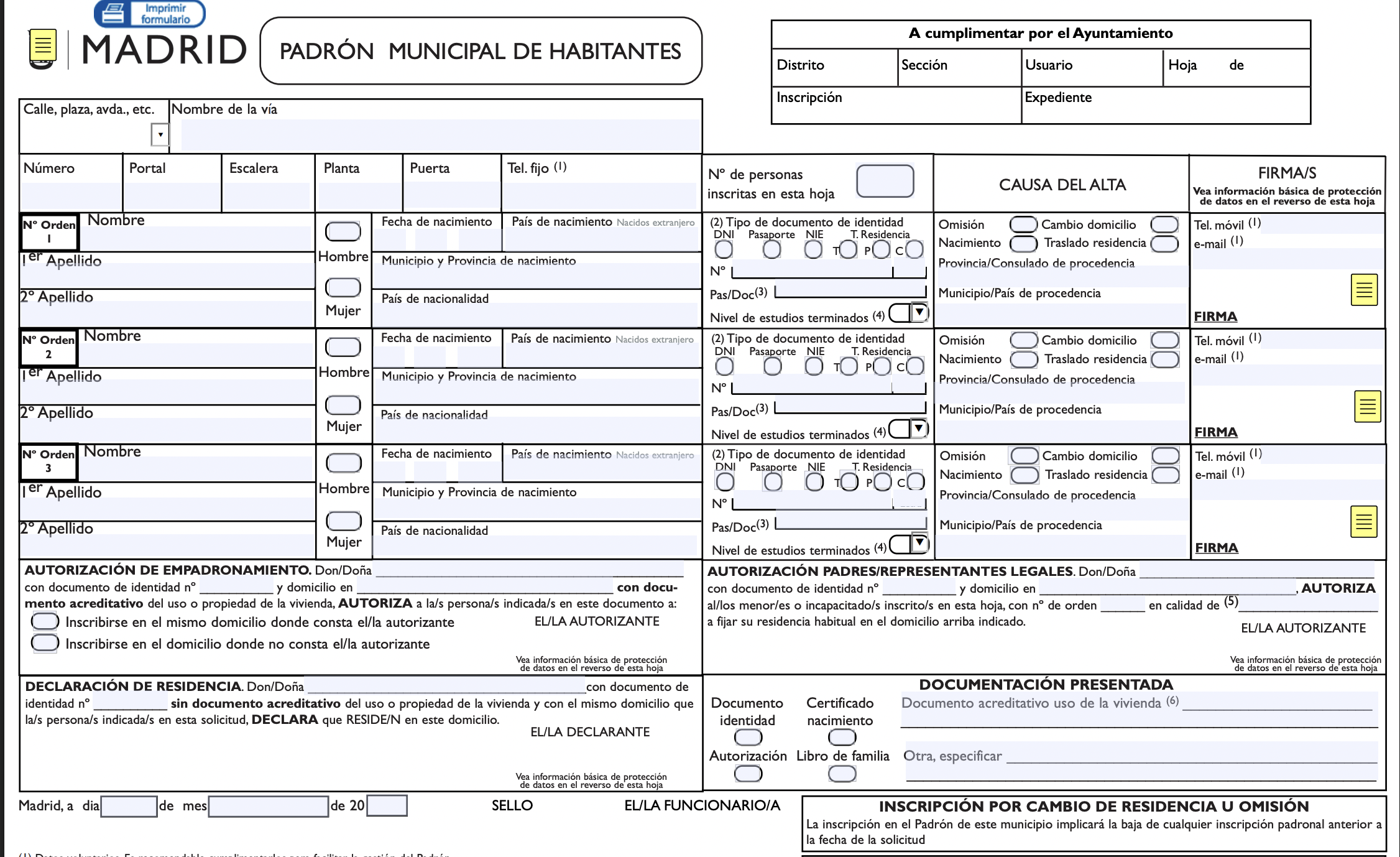
While requirements vary, you will normally need:
An application form
Identification, usually a passport
If you already have a NIE, bring it, but it is not always required
Proof of address, such as:
A signed rental contract, or
Proof of property ownership
Some town halls may also ask for extra documents depending on the situation, especially for shared apartments or room rentals.
Do you receive the certificate immediately?
Often, yes.
In many town halls, you will receive the padrón certificate:
Printed and stamped on the same day, or
Available to download shortly afterwards
In other cases, you may need to:
Return later, or
Download it online, or
Receive it by email
The important thing is that once your registration is accepted, you are officially empadronado, even if the certificate itself arrives a little later.
Final thoughts
The padrón is one of those things that sounds more intimidating than it really is.
Think of it simply as:
Proof of where you live, issued by your local town hall.
Once you have it, many other parts of Spanish bureaucracy become much easier.
In the next step, this padrón certificate is normally used to apply for your digital certificate, which allows you to deal with taxes and official paperwork online without constantly going back to government offices.